May Greene
The People UpstairsMay Greene is the emotional and strategic center of the story’s domestic version of alien infiltration. Living under a human disguise in Washington Heights with Dan Greene, she has been adapted for a lifetime assignment on Earth, trained to remain inconspicuous, and accustomed to treating local life as a distasteful professional environment. Her unexpected pregnancy breaks through that discipline. The child threatens her mission, her body’s carefully maintained disguise, and her ability to return to Milotis, yet it also awakens a long-suppressed desire for motherhood and ultimately gives the family a new reason to remain on Earth.
Identity and Background
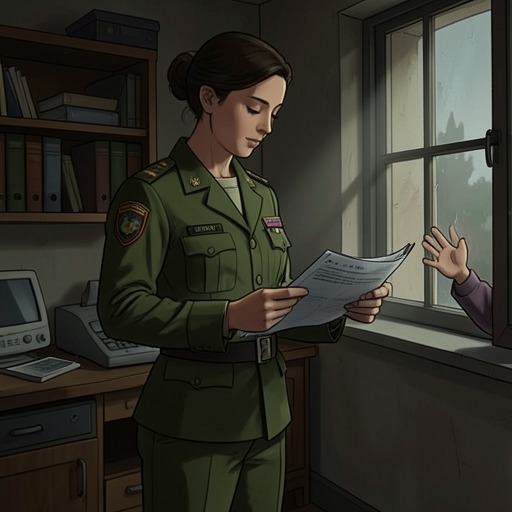
May Greene first appears as an apparently ordinary woman returning from New York City after consulting Dr. Robinson. Her neighbors know her as Mrs. Greene, a reserved but usually detachedly friendly tenant, while the story gradually reveals that this identity is constructed. At home she removes a silk-thin plastomask and Milotan contact lenses; her natural body, like Dan Greene’s, is humanoid but not fully human. The couple’s assumed names are Earth equivalents of their former names on Milotis, and they use them even in private so that they will not make a public mistake.
Her physical adaptation has been extraordinarily costly and irreversible. The assignment has included alterations and amputations, leaving her and Dan as unnatural figures on Milotis just as their undisguised bodies would be conspicuous on Earth. May therefore occupies an unstable position between two worlds: she is biologically Milotan, socially presented as human, and no longer able to return comfortably to the society from which she came. Her dyed pepper-and-salt hair, altered terrestrial hairbrush, plastomask, and contact lenses make concealment a daily material practice rather than an abstract principle of espionage.
The Greenes are part of a long-range Milotan plan. May knows that thousands of secret agents are scattered across Earth and that the project anticipates hundreds of thousands, eventually millions, of agents before the organization is complete. The scale of that plan places her private life inside a colonial timetable measured in centuries. She and Dan are expected to pass as average middle-class individuals, while their salaries merely supplement allowances from Milotis because life on an alien planet is so expensive. Her ordinary apartment and conventional possessions thus serve both as camouflage and as evidence of the labor required to manufacture ordinariness.
Pregnancy and the Decision to Keep Terence
May’s pregnancy is announced after Dr. Robinson has offered to terminate it without reporting the matter to Milotis. She refuses because she has wanted a child all her life and had agreed to the Earth posting only after deciding that, at her age, motherhood was no longer possible. The pregnancy is therefore not merely an accident that complicates the mission. It exposes a personal hope that she had buried so thoroughly that the Bureau’s assumption of her sterility had seemed reasonable.
Her first response combines fear, resentment, and defiance. May expects the Bureau to blame both her and Dan for failing to take proper precautions, and she accepts that part of the criticism would be justified. She also understands the practical consequences: the couple will probably never again receive an Earth assignment, and returning home will be difficult because their bodies can no longer be adapted back. Nevertheless, she will not surrender the child simply to preserve professional standing. Her refusal changes the terms of the marriage’s crisis, forcing Dan to confront not only the mission but the emotional cost of obeying it.
May is the one who imagines a possible escape from the dilemma. She proposes that Dr. Robinson make masks in progressively larger sizes and that the child be kept at home as much as possible. When Dan points out that compulsory schooling would begin at about six, along with medical examinations, she considers a tutor, even though a tutor would itself violate their need to appear average in Washington Heights and might expose the secret to another person. Her proposals are impractical, but their urgency matters: she is already thinking as a mother trying to preserve a child’s future, not merely as an agent protecting operational security.
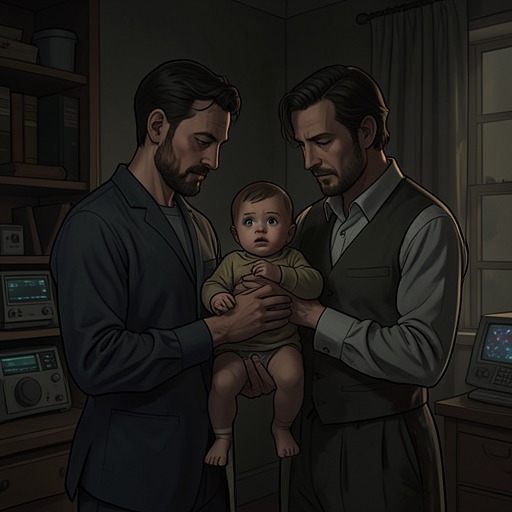
Dan finally agrees that they will keep the child, though neither parent is happy with the decision. Eight months later, Terence Greene is born on Earth in the United States of America. Because he has a genuine birth certificate, he is the first Milotan on Earth who does not need forged papers; technically, he is not even a Milotan. May’s choice therefore produces a legal and biological paradox. The child belongs to the planet of his birth in official terms, while his body requires constant Milotan technology to pass as human.
Motherhood, Labor, and Economic Cost
The practical consequences of May’s decision fall heavily upon her. Milotan babies have the same range of demanding physical needs as terrestrial babies, but robots would have cared for them on Milotis. On Earth, where the Greenes must conform to local customs and lack the same technology, May remains at home while Dan continues working. Her loss of income is a serious blow because the family already finds life on Earth tremendously expensive.
The sacrifices quickly exceed the modest luxuries she had expected to surrender. Dan gives up the imported Milotan tobacco substitute, and May gives up the delicacies from home that arrive repackaged as Rice Krispies and Coca Cola. Eventually the family cuts into necessities as well. The disguises Dr. Robinson makes for Terence are costly, and the child’s slower Milotan growth only delays rather than removes the financial pressure. Motherhood thus becomes a form of unpaid labor performed under surveillance, technological dependence, and declining material security.
May’s emotional relation to Terence is more complicated than simple maternal fulfillment. She spoils him because she feels guilty that he does not provide the pleasure she had confidently expected from having a child. At times she receives no pleasure from him at all and wonders whether he was worth the trouble she and Dan have endured, even regretting that she did not accept Dr. Robinson’s offer. Remorse follows these thoughts, and she gives Terence things that are not good for him but that he wants. Her guilt produces indulgence, while her disappointment prevents motherhood from becoming the uncomplicated reward she imagined.
She also works to shape Terence’s identity from infancy. May takes him out daily into the Earth sun, exchanges evasive pleasantries with neighbors, and stops taking him to the roof at night to look toward the distant brightness of Milotis once the neighbors become curious. At home, she and Dan speak both Milotan and English so that he will know both languages, warn him never to use Milotan in public, and keep him away from other children whenever possible. Her care protects him, but it also encloses him inside the secret that defines the family.
School, Exposure, and Family Recognition
When Terence reaches six, May can no longer keep him outside the institutions of Earth. She enrolls him in a private day school because she wants him to receive the best limited advantages available on the planet, while boarding school is impossible. To prevent medical examination, she tells the principal that the Greenes are Christian Scientists. The school’s expensive fees encourage the principal’s understanding, and May briefly uses a human religious identity as an additional layer of biological concealment.
May is terrified on Terence’s first day. She searches his childish mask for signs of distress and waits in fear when he does not immediately speak about school. Yet Terence adapts well enough to appear like an ordinary child, even developing the self-possession of a child raised mostly among adults. May’s precautions seem to work until swimming lessons make the disguise impossible. The school’s genteel surface gives way to the demand that Terence expose his body before others.
When Terence tells her that swimming lessons have begun, May reacts with horror. She has learned that humans appear unclothed or nearly so before one another, but she has never imagined that this custom would confront her son directly. Terence’s accusation that he is different, and that his parents are responsible for that difference, turns the secret from an operational problem into a family wound. May has told him that he is different, but she has withheld the reason, and he experiences that partial truth as a betrayal.
The principal’s discovery ends Terence’s place at the school. May immediately resumes her professional performance, apologizing for the family’s failure to disclose his condition and agreeing that he cannot remain. She claims that the family has already considered moving to the suburbs because Washington Heights is too dangerous for raising a child, proposing a new school where nobody will know him. When the principal urges her to inform the authorities at the next school, May answers with carefully exaggerated gratitude, concealing her amusement beneath the role of a grateful, distressed mother.
Change and Narrative Significance
The school crisis produces the closest physical and emotional contact May has felt with Terence since his infancy. He clings to her hand all the way to the car, and the gesture restores a sense of intimacy that her guilt, surveillance, and practical burdens have repeatedly interrupted. The child who had been managed as a security risk becomes unmistakably her son in the immediate aftermath of rejection.
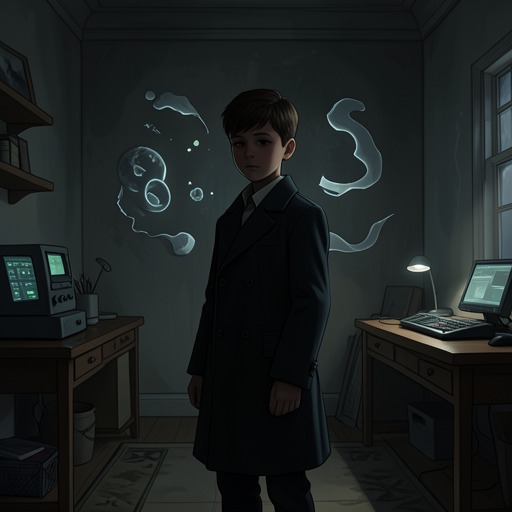
During the drive, Terence asks in halting Milotan whether Milotis truly exists and whether everyone there is like him. May confirms that she and Dan have not invented it. For years she has rationed knowledge of his origin, telling him only that they came from a far-off place because she feared he lacked the discretion to protect the secret. Now his exposure has made concealment untenable. May responds not by denying the revelation but by promising that she and Dan will tell him all about Milotis when they reach home.
Her final action joins motherhood to the long-distance machinery of the Milotan mission. As she drives, May touches the plastoskin covering Terence’s small, mutilated hand and says that they will send a beam to Milotis telling them all about him. The report marks him as a potential asset to the larger infiltration project, since his Earth birth, legal status, and native familiarity with human society may make him more useful than either parent. Yet the gesture is also intimate: she touches the disguised hand that embodies his vulnerability while preparing to announce his existence to the distant society that demanded their secrecy.
May therefore ends the story neither as a liberated human nor as a fully obedient agent. She has chosen Terence against the Bureau’s expectations, accepted the economic and professional consequences, and protected him through layers of disguise; at the same time, she recognizes that his usefulness to Milotis may justify the sacrifice in the eyes of the organization. Her maternal attachment and her colonial duty remain entangled. The story’s final irony lies in that entanglement: the child who makes May feel most deeply at home also becomes the family’s most promising instrument for an alien future on Earth.